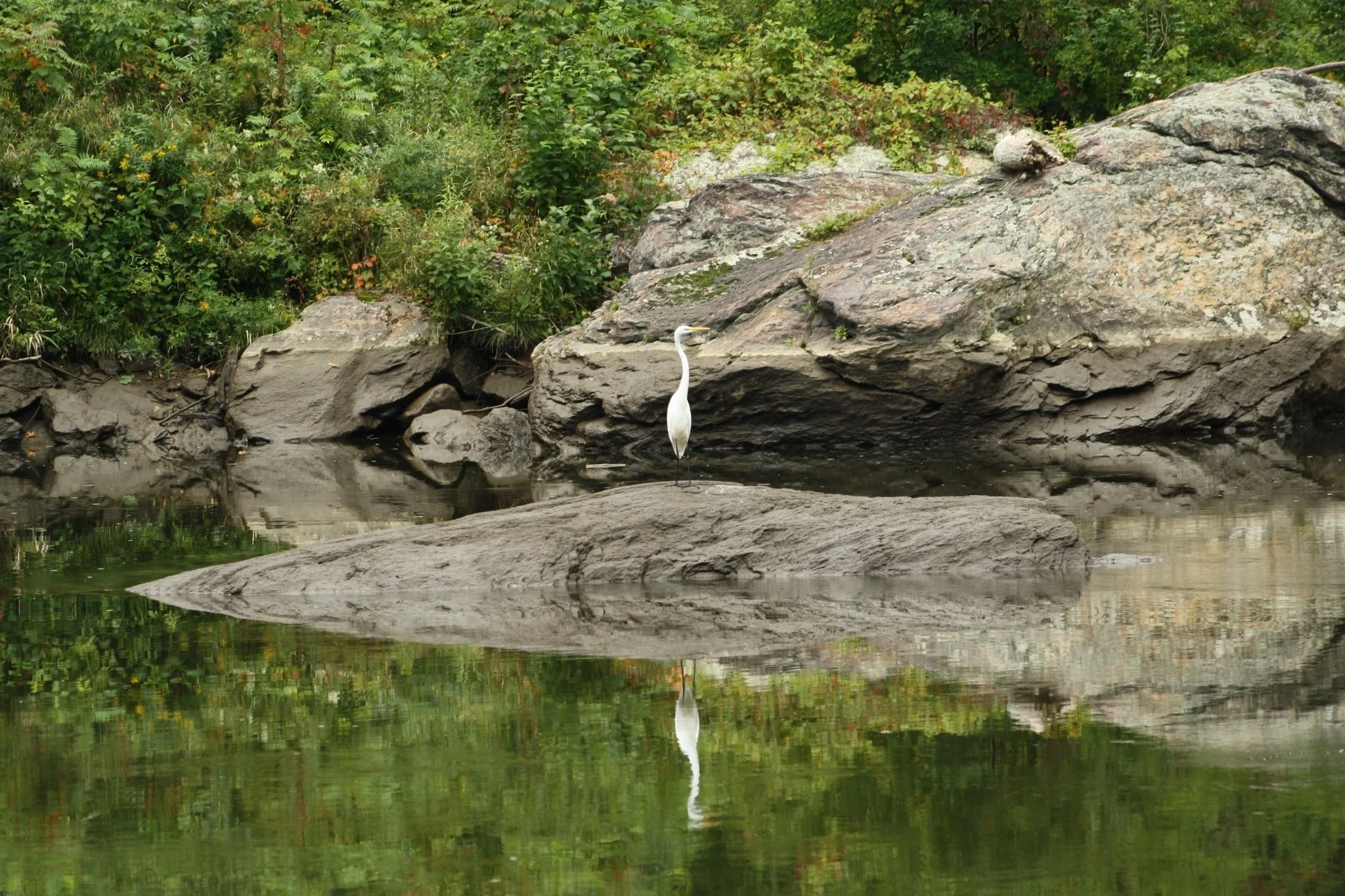
Conservation Committee Re-formed
By Scott Sainsbury
At the close of the 19th century, Americans began to wake up to both the value and the fragility of the landscapes and wildlife that defined their country.
The forests stretching from New England to the Mississippi were largely conquered -- transformed into red barns, white churches and village homes with picket fences. The time of endless migrations -- with millions of birds passing overhead – were playing out. Everywhere new populations grew, destruction of habitat, and losses of wildlife and native populations were the result.
The American mind was intoxicated by the vastness of the new continent. The riches of the land seemed limitless… and it didn’t really matter if the Buffalo, Beavers, Egrets, Whooping Cranes, Carolina Parakeets and many, many more were sacrificed in pursuit of wealth and destiny.
Fortunately, some saw things differently.
In 1836, Ralph Waldo Emerson wrote of the spiritual need for connection with nature. In the 1850’s Thoreau moved to the famous pond. John Muir became Emerson’s “prophet” opening eyes to the wonders of -- and need to protect -- the high Sierra and Alaska. Yellowstone became the first national park in 1872. The Sierra Club was founded in 1892. In 1903 Theodore Roosevelt established the first of today’s 573 National Wildlife Refuges. And In 1905, local and regional Audubon groups united to formally charter the National Audubon Society.
The great race (and often great fight) to understand, protect, and conserve our lands and waters and the wildlife depending on them has continued since. Sadly, the facts indicate that every day, we continue to lose the battle.
1300 species are now listed on the endangered species list
Bird populations dropped by 1/3 in the last 50 years
US Fish and Wildlife reported in 2024 that the U.S. had lost over half of its original wetlands… and that 670,000 acres of that loss occurred recently -- between 2009 and 2019
It’s tough to hear. But, there has been progress – without which it could be much worse.
Beginning in 1918, the Migratory Bird Treaties with Canada, Mexico, Japan and Russia have protected over 1000 species of birds from being hunted, captured, killed, sold or transported.
Aldo Leopold’s, A Sand County Almanac (1949) – introduced the “land ethic” that became foundational to modern environmental thinking, regulation, and land use planning (e.g. Vermont’s Act 250).
Rachael Carson’s Silent Spring (1962) – shocked Americans with the realization of how little self-interested organizations cared for the environment or about their impact on all living things.
Carson’s book became the spark of activism and the impetus for major societal and legislative actions such as:
Earth Day (1970)
Clean Air Act (1970)
Environmental Protection Agency (1970) and its analogues in every state
Clean Water Act (1972)
Superfund creation (1980)
The Neo-tropical Migratory Bird Conservation Act (2002)
It’s a movement that leads directly to us:
In 1995, a group of Vermonters -- inspired by the environmental movement and their deep appreciation for the birds, environment, and wildlife of our state -- formed the Green Mountain Audubon Society as a chapter of the National Audubon Society.
Today, our chapter has roughly 1000 members, sponsors dozens of outings and presentations, and supports other groups in our state that are working for the birds through grants funded by our endowment.
But, there is one dimension of our founding charter that has been quiet for a while. When our chapter’s founders laid-out the by-laws, they specified that there should be a standing “Conservation Committee” that would inform the Board and membership of…
“….local, state and national governmental policies and actions affecting the natural environment, habitat, and conservation of natural resources.
It may (also) draft and recommend conservation policies for adoption by the Board of Directors.”
Recently, the Board agreed to reactivate the Conservation Committee. A few of us have agreed to serve as initial contributors to the effort.
We will start by writing a regular column, filling members in on the well-being of our bird populations and actions being taken to improve or threaten their vitality. From time to time, we will offer suggestions on actions members can take to support Vermont’s birds and birders. From there, we’ll see how it goes.
I am inspired by birds every day. And I deeply value the time I spend with all of you who share that appreciation. But, every bird also reminds me of how deeply important it is to be wide-eyed and realistic about the journey we must pursue to protect the birds and the world we share with them. It’s our job to pay forward what the founders of our association began. Together, we can make a difference.